Showing posts with label trigger points. Show all posts

Wednesday, October 29, 2014

Is it Carpal Tunnel Syndrome?

     With all the work we do on our smart phones, tablets, and computers, it's not surprising that many of us suffer from pain in our arms, hands, and fingers.  It's easy to write off the swelling, numbness, tingling, and general discomfort as carpal tunnel syndrome.  However, I've worked with several clients who had surgery for such a diagnosis with little to no relief.  So if it's not CTS, what's the problem?

First, let's clarify what Carpal Tunnel Syndrome is:
     The carpal tunnel is an opening in the wrist made up of the carpal bones, ligaments, and other fibrous tissues.  With Carpal Tunnel Syndrome, the median nerve and tendons traveling through this passageway become compressed when the carpal tunnel is swollen or restricted.  This compression causes numbness and tingling of the wrists, hands, and fingers.

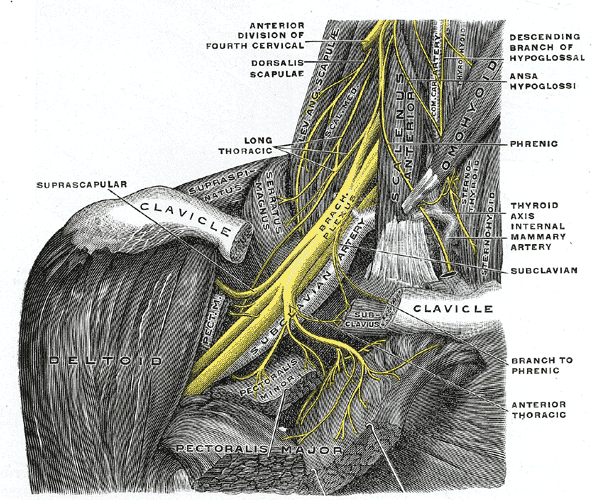
     More commonly though, the impingement of the thoracic outlet (the opening between your collarbone and upper ribs where the nerves and blood vessels pass through to supply the arms and hands) is actually the root of all these symptoms.  When the muscles (i.e. the scalenes) around this opening become tight and shortened, they pull the first rib up against the collarbone, restricting blood, lymph, and nerve supply to the arms, which ultimately causes all the same symptoms as carpal tunnel syndrome.  (The pectoralis minor, triceps, brachialis, and some of the forearm muscles can also become tight and impinge nerves of the arms and hands.)
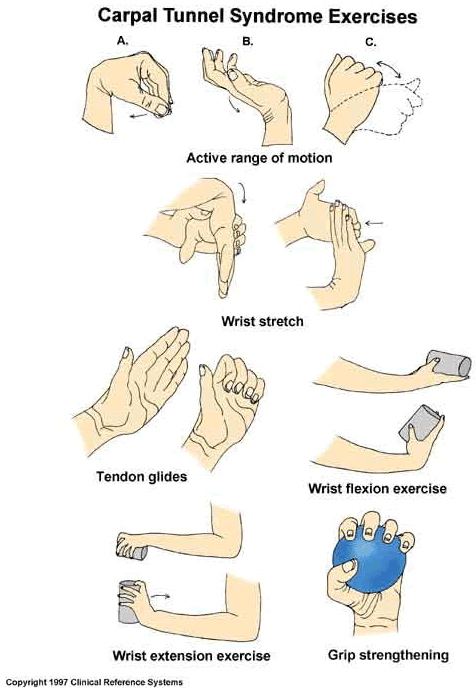
If it is truly CTS, where most of the restriction is at the wrist, maintaining proper body mechanics, stretching your hands and forearms throughout the day, and avoiding poor sleep habits (like bending your wrists or tucking them under your pillow all night) should alleviate many of the symptoms.

I also use contrast bathes frequently for my forearms and hands.  Ice water submersion for 1-2 minutes, then hot water for the same - just go back and forth about 3 to 5 times, always ending with the ice water!  This basically creates a forced circulation, pushing blood out with the ice water then opening up the blood vessels and tissue to new oxygenated blood with the hot.  It works wonders.

If your symptoms seem to be stemming from further up the arm - maybe even into the shoulder and neck - your scalenes (anterior, medial, and posterior) and pectoralis minor are most likely the main culprits. 

Check out my previous post - Shoulder Pain - for stretches and exercises to alleviate tightness and pain in the shoulders and neck.

On a semi-side note, POSTURE is everything!  Check in with your posture throughout the day; you'll probably be amazed by how curved forward and curled up you can get while engrossing yourself in work (or a Netflix binge).  Sit up straight, lift the crown of your head to the ceiling, and let those shoulders fall back.  This might seem easier said than done, but with massage, self care, and stretching, you can absolutely work your way to less pain with better posture.

And I'll leave you with this.  :)



Friday, May 30, 2014

TMJ & Forward Head Posture

     Hey guys!  The month of May has been a fabulous, crazy, fast month for me, hence my lack of posts the previous couple of weeks.  I want to thank everyone who helped with the grand opening party and came out to support us.  You are all amazing, and I am so grateful to have you in my life!  For future reference, if I ever take off and leave you guys without prompts, you can always visit my Pinterest for stretches, exercises, health tips, etc.
     _______________________________________________________________

     This week I'm going to cover a bit about the TMJ (temporomandibular joint), TMD (temporomandibular disorders), and what role forward head posture has in the mix.

Temporomandibular joint and muscle disorders (TMJ/TMD) are the symptoms of tension or injury to the chewing muscles and joints connecting your jaw (mandible) to your skull.

Here you can see the superficial muscles (the masseter and temporalis), a cut away to view the deep muscles (the pterygoids), and where the muscles insert on the mandible (jaw bone).
(You can view a larger version of this picture here!)

Elevation of the Mandible                                                     Muscles Responsible
 Masseter, Temporalis, Medial Pterygoid
Retraction of the Mandible
Temporalis
Protraction of the Mandible
Medial & Lateral Pterygoid
Lateral Deviation of the Mandible
Medial & Lateral Pterygoid

And here is how forward head posture can pull your entire spine out of alignment:
Watch this video- It's a great link on how to work with TMJ pain with Erik Dalton.  He explains a few different muscles I haven't covered yet, but goes into greater detail with forward head posture and TMJ/neck pain.
     _______________________________________________________________

To put it simply, when your head moves forward from slumping over your desk all day, the muscles attaching to your jaw become shortened, retracting your jaw (see the yellow circle above.)  Clenching/grinding your teeth tightens these muscles as well.  Your jaw gets pulled into this area, creating tension and pain due to limited range of motion in your temporomandibular joint.  You can perform self massage in or outside of your mouth to release some of these muscles, as well as along your temples and behind your ears.

Here are some TMJ trigger points and pain patterns.  You can apply pressure to the black X areas while gently, slowly opening and closing your mouth.  Repeat 10 times.

Masseter:                                                            Temporalis:
You can also use a wine cork to relax your jaw by placing it between your teeth.  Relax and hold for 20 seconds. Repeat 3 to 5 times.

To relieve forward head posture, you can turn your head to the left and feel your right SCM pop up.  Gently pinch it between your pointer and thumb on these black X areas and slowly tilt your head back as far as you are comfortable with.  Hold each for 10 seconds and release.

SCM:
You can also place the tips of your fingers on the insertions (at the inside edge of your collarbones) and gently tilt your head backwards to stretch these guys!


And I'll leave you with this.  Have a wonderful weekend!!!